Elementary & Secondary Education Act (ESEA) Reauthorization (March 2010)
Members of Congress Question Administration's Vision For 21st CCLC (March 2010)
Senators Move to Improve, Expand 21st CCLC (March 2010)
Actor Hill Harper to Headline 2010 Afterschool For All Challenge (March 2010)
2010 MetLife Innovator Award Nomination Process Underway, Nominate Your Program Today! (March 2010)
Secretary Duncan Defends Obama Budget Proposal (March 2010)
Afterschool and Older Youth (Feb 2010)
Take Action: Tell the Administration that Proposed Budget Cuts to Afterschool, Hurts Kids (Feb 2010)
Groups See Disappointment, and Hope, in President's 2011 Budget (Feb 2010)
Quaker's "Afterschool Rocks": Win a Private Concert by Miranda Cosgrove for your Kids! (Feb 2010)
Submit Artwork for 2010 Lights On Afterschool Poster Art Contest (Feb 2010)
NYTimes 'Home Alone' Editorial Calls for More Afterschool (Oct 2009)
Afterschool and Older Youth
In Benton, Arkansas, at-risk high-schoolers are encouraged to dream about college. In San Francisco, California, high school students focus on project-based learning experiences. And in Concord, New Hampshire, older students are conducting research in hospitals and working alongside legislators for school credit. Such strategies are among the many innovative approaches afterschool programs across the country are using to engage older youth.
In late February, a panel of experts convened by the Afterschool Alliance explored the topic - both the challenge of attracting and keeping older youth in afterschool programs and the successful strategies programs are employing to do the job - at a special briefing for Members of Congress and their aides. The event was hosted by the Afterschool Alliance, with support from the Nellie Mae Education Foundation, in conjunction with Senators Blanche Lincoln (AR) and Evan Bayh (IN), key congressional supporters of afterschool programs.
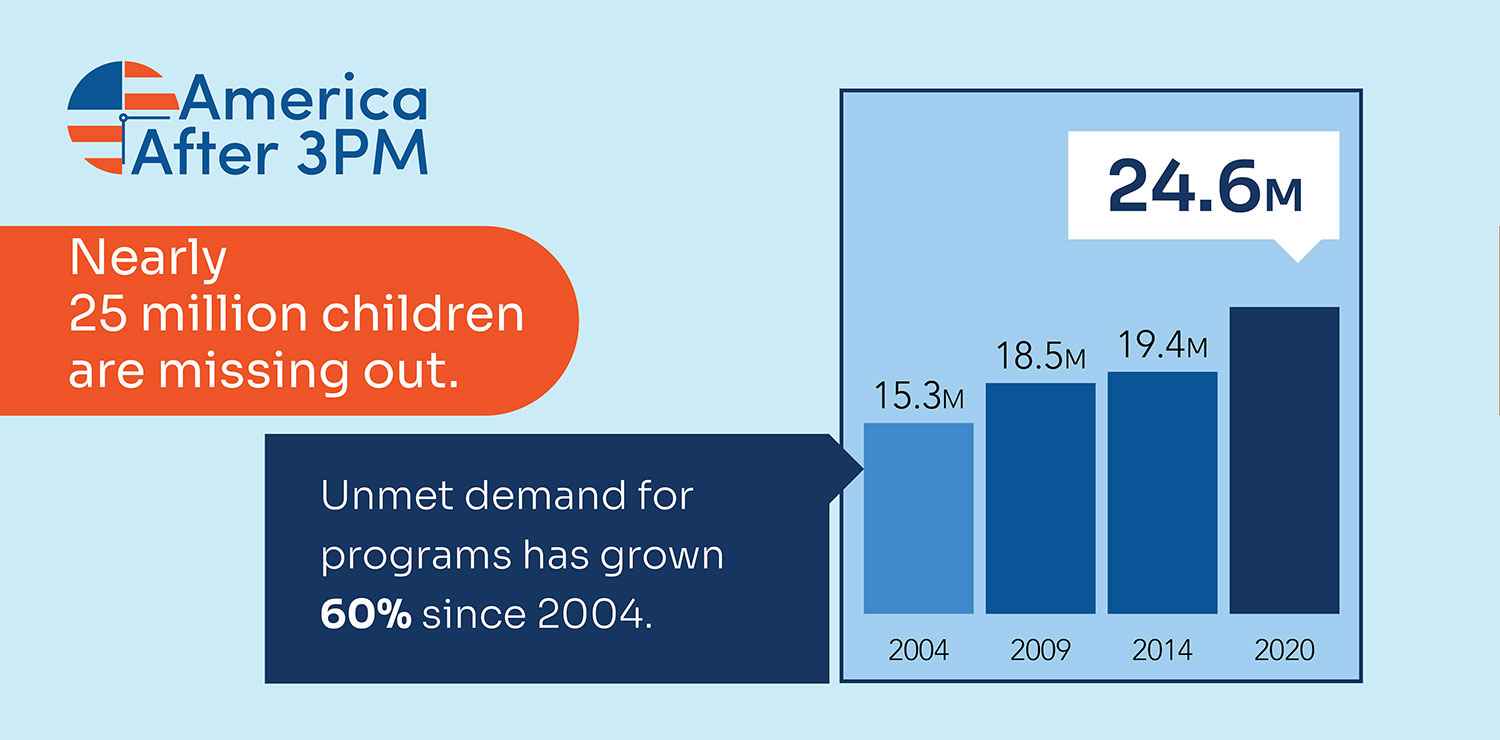
Panelists agreed that high-school age youth pose unique challenges for afterschool providers, both because they are often able to "vote with their feet" if they are not interested in a program's activities, and because they are more difficult to engage than younger children. Many afterschool programs are geared more toward the interests and needs of younger students. But older youth demand greater autonomy and more choices, as well as social opportunities, real-world relevance and even hands-on job experience. The Afterschool Alliance's 2009 America After 3PM report, sponsored by the JCPenney Afterschool Fund and based on a survey of nearly 30,000 households, underscored the scope of the challenge. According to the data, about 500,000 of the 8.4 million students who participate in afterschool programs are in grades nine through 12, but almost 4 million more high school students would participate if programs were available and accessible to them.
Innovative Practices
"We're getting very intentional about the architecture of what these programs look like, in terms of not only learning academics, but learning life skills," said panelist Michael Funk, Founder and Director of the Sunset Neighborhood Beacon Center (SNBC) in San Francisco. Students learn in different ways, and many can be bored by the approaches used in the traditional school day. Funk explained that the SNBC has exercised great care in the approaches it uses to reach out to older youth.
PlusTime New Hampshire is completing the third year of a pilot program that allows high school-age students to work closely with adult mentors and professionals to create projects that let students earn school credit. These projects are driven by student interests and often feature community service elements. "When it is meaningful, real work, it benefits everyone," said Janice Hastings, Vice President of PlusTime New Hampshire. PlusTime students have recently completed a research project on hand-washing standards at a local hospital, and an initiative in which students created a business that procured and sold discounted formal wear for low-income students.
Funding Challenges and Opportunities
Despite all the groundbreaking work they are doing, many programs aimed at older youth are struggling to find sufficient funding. "We are doing all we can," said Jasen Kelly, Director of the Boys & Girls Club of Saline County in Benton, Arkansas. Finding adequate funding is complicated by the 21st Century Community Learning Center's focus on programs geared toward younger children, he said.
Senators Lincoln and Bayh are co-sponsors of the After School Partnerships Improve Results in Education (ASPIRE) Act, which would create a new federal funding stream for afterschool programs that reach middle and high school-age students in lower-income or rural areas.
"The need for a dedicated funding stream for afterschool programs is clear," Senator Lincoln said in a statement. "These numbers tell a convincing story of middle and high-school aged youth who would prefer to spend their after school hours in an educational or otherwise productive program, but who have no opportunity to do so."
Learn more about the ASPIRE Act and how it would help afterschool programs focusing on older youth here. Take action and encourage your Senator to support this critical bill here.
Read the Afterschool Alliance's issue brief, Recruiting and Retaining Older Youth. Sunset Neighborhood Beacon Center has published a report that includes examples of specific strategies for reaching older youth: The Best of Both Worlds: Aligning Afterschool Programs with Youth Development Principles and Academic Standards.
Quaker Chewy Offers Parents a Chance to Win Miranda Cosgrove Performance For Their Children
The Afterschool Alliance is working with Quaker Chewy Granola Bars to help raise awareness about the importance of afterschool programs, especially in underserved communities. As part of that effort, Quaker Chewy is giving parents a chance to win a free private afterschool performance for their children hosted by actress and recording artist Miranda Cosgrove, the star of Nickelodeon's highest rated live-action show "iCarly." The winner can invite 300 guests to the performance.
"Today more than 15 million children in this country are alone and unsupervised after the school day ends," said Afterschool Alliance Executive Director Jodi Grant. "With tight budgets forcing programs to reduce hours and even close their doors, we are especially grateful that Quaker Chewy is helping us spread the word that families and communities need more quality afterschool programs to keep kids safe, inspire them to learn and help working families. Quaker Chewy is a real champion for afterschool programs."
Another important part of afterschool time is wholesome snacking and Quaker Chewy bars are a long-time favorite of moms and kids alike. With half a serving of whole grains (8 grams) and no high fructose corn syrup, they're a great snack option to help keep kids going between 3 pm and 6 pm, just before dinner.
In addition to supporting the Afterschool Alliance, Quaker Chewy is energizing parents everywhere with the possibility of entering for a chance to win a live performance by Cosgrove through the Quaker Chewy Afterschool Rocks Sweepstakes. Her debut solo album hits stores this spring, and she will play a role in the animated film "Despicable Me" this summer. The Quaker Chewy Afterschool Rocks sweepstakes gives her fans one of the first chances to experience her new music live.
"I'm really excited to team up with Quaker Chewy and Afterschool Alliance in their support of afterschool programs," says Cosgrove. "I hope that it helps more people understand how afterschool programs can support healthier lifestyles for kids."
Adults, age 18 or over, can visit www.QuakerOats.com to enter the sweepstakes (until 11:59 pm on April 16, 2010) for a chance to win a private musical performance by Cosgrove to be held in or near the winner's hometown. The winner will be selected in a random drawing on or before April 20 and notified on or about April 28, 2010. No purchase necessary. Open to legal residents of the 48 continuous United States or the District of Columbia, who are 18 years or older as of February 8, 2010. See Official Rules for details at www.QuakerOats.com.
ESEA Reauthorization
The Obama Administration's "Blueprint for Reform, The Reauthorization of the Elementary and Secondary Education Act" has been released. It is the Administration's vision for federal education policy, and has implications for 21st Century Community Learning Centers and other federal programs related to afterschool. The plan includes the diversions and consolidations of afterschool funding first hinted at in the President's budget proposal. The Afterschool Alliance has met with the Department of Education to voice concerns about the plan. The next Afterschool Advocate will include in-depth coverage of the new blueprint, Education Secretary Duncan's testimony about it before Congress later this week, and the afterschool community's response. Watch for it early next week!
Join the Afterschool For All Challenge!
This year, for the first time, the Afterschool Alliance's Afterschool for All Challenge will be held in conjunction with Be the Change, the National Afterschool Association's annual convention. The combined event will be held in Washington, D.C. from April 19 to April 21. It will include plenary sessions with policy makers and experts, dozens of workshops, a Capitol Hill Rally for Afterschool, a gala "Breakfast of Champions," and visits with lawmakers on Capitol Hill. Register now and be a part of this one-of-a-kind event! The deadline to register is March 31, so don't delay.
Members of Congress Question Administration's Vision For 21st CCLC
For the second time in a month, U.S. Education Secretary Arne Duncan testified before a House of Representatives Committee on March 3 - and once again he faced congressional concern over the Administration's proposal for the 21st Century Community Learning Center (21st CCLC) afterschool initiative.
At the hearing before the House Education Committee earlier this month, Representative Dale Kildee (D-MI) praised the 21st CCLC initiative, noting the direct benefits he has witnessed from the program in his district. "In Flint, Michigan, [21st Century Community Learning Center-funded programs] have saved not only many a child, but many a family," he said.
Representative Kildee questioned Secretary Duncan about the Administration's support for the initiative, noting that the Administration's proposal to include extended day initiatives and community schools in the same funding pool as 21st CCLC would decrease funding available for afterschool.
Secretary Duncan tried to assure Members that he is a "huge fan of afterschool programming." He noted that the President has requested an additional $1 billion for education if the Elementary and Secondary Education Act (ESEA) is reauthorized this year, and "part of how we use it is for afterschool programming... there is a chance for significant resources to come."
Early indications, however, are that the additional money would go to extend the traditional school day, rather than support afterschool programs. Representative Kildee cautioned the Secretary that he is "very, very skeptical about lessening [the federal government's] help to these programs."
Representative Howard "Buck" McKeon (R-CA) expressed concern about granting waivers to Supplemental Education Services under Title I that "could make services unavailable to low-income folks." Secretary Duncan responded that tutoring "is in my DNA." He said the Administration will support programs that are "good actors" and produce results, but warned that tutoring programs that are "bad actors" should not receive federal support. "We have to continue to extend our learning time" to include tutoring after school, on weekends and during the summer, he said. We "need to look at providers and districts [that] are doing a great job."
"We appreciate the kind words from the Administration, and look forward to seeing whether the language in the President's proposals for ESEA makes good on the commitment Secretary Duncan expressed," said Afterschool Alliance Executive Director Jodi Grant. "Afterschool programs are struggling to provide a variety of vital services for kids, ranging from tutoring to opportunities for physical fitness to nutritious meals. At the same time, they're working to expose children to activities they could never get during the regular school day, fostering their interest in learning, and keeping children safe and off the streets while parents are at work or trying to find work. The afterschool community is looking to the Administration for a real commitment to strengthening and expanding the high quality afterschool programs that 21st CCLC funding supports."
To learn more about how to take action and help advocate for more funding for 21st CCLCs, go to the Afterschool Alliance's Policy & Action Center.
Senators Move to Improve, Expand 21st CCLC
On March 3, Senators Christopher Dodd (D-CT) and John Ensign (R-NV), co-chairs of the Senate Afterschool Caucus, introduced the Improving 21st Century Community Learning Centers Act of 2010 (21st CCLC). The bill would improve and expand access to afterschool programs for children across the country.
"Our legislation is a positive step towards offering all of our children the chance to spend their time outside of school safely and productively. It is a step towards making good on the most important promise: the one we make to our kids," said Senator Dodd.
"I was raised by a hard-working single mom whose work day continued long after my school day had ended," added Senator Ensign. "I know the importance that afterschool programs play in the lives of many children who may otherwise be left unattended when they return home from school, and our legislation will ensure that these programs receive the resources they need to continue their important function."
Specifically the bill would:
* Reauthorize the 21st CCLC initiative, renewing the nation's commitment to high quality afterschool programs.
* Provide states with tools designed to sustain high quality afterschool programs by allowing programs to continue to receive federal funding based on their performance. The legislation also gives states the ability to work with programs across the state to further improve quality.
* Increase opportunities for children and young people to be more physically active. As childhood obesity reaches epidemic proportions, allowing for such opportunities is critical to ensuring children's overall health.
* Encourage children to be involved in community service and youth development activities. It would encourage volunteer work that integrates student-designed service projects with academic studies. Such programs have been shown to strengthen student engagement, enhance student achievement, lower drop-out and suspension rates, develop workforce and leadership skills, and provide opportunities for teamwork.
"The 21st CCLC initiative is the backbone of afterschool in so many communities," said Afterschool Alliance Executive Director Jodi Grant. "We are grateful for the strong support from Senators Dodd and Ensign, and look forward to helping advance this important bill which recognizes, protects and expands the work of the 21st CCLC initiative."
Students Put Heart into Afterschool Advocacy
In mid-February hundreds of colorful, hand-made Valentine's cards began appearing in the mailboxes of California's elected officials in Sacramento and Washington, D.C., all with powerful messages about the importance of afterschool programs. That's because students at Los Angeles' Woodcraft Rangers afterschool program, mobilized by their program directors, applied their creativity to creating Valentine's messages that thank elected officials for past, present and future support for afterschool funding.
"We've been trying to get kids and parents more involved in advocating for themselves and their programs," said Cathie Mostovoy, CEO of Woodcraft Rangers and an Afterschool Alliance Afterschool Ambassador. It's important, she added, that students understand that funding for afterschool can be taken away. Sending Valentine's cards to elected officials was an "easy and effective" way to involve them in advocacy.
Mostovoy thinks the student-made Valentines were more powerful than a traditional letter-writing campaign. Connecting the campaign to Valentine's Day made the project fun for the elementary and middle school-age students, she says, and allowing them to create their own cards provided a platform for students to apply their creativity to communicate an afterschool message.
Delivering the Right Message
The Valentine advocacy campaign focused on two messages - one for state elected officials and another for Members of Congress. In California, where afterschool is funded by a voter-mandated dedicated funding stream, known as the After School Education and Safety program, students thanked their legislators for their support and asked them to preserve the funding. But in Valentines that were sent to Members of Congress - and some that went to President Obama - students urged officials not to cut federal funding for afterschool, and shared examples of the positive ways in which afterschool programs have affected their lives.
Program directors collected the Valentines and sent them to Woodcraft Rangers' main office, where the cards were labeled and mailed out. According to Mostovoy, program directors were particularly excited to learn that about a dozen parents had written Valentines of their own for elected officials, explaining how important the programs are in their lives.
Delivering a Valuable Lesson
Mostovoy says the project fit well with Woodcraft Rangers' increasing focus on civic participation and self-expression, and it gave program directors an easy avenue to engage students in advocacy. "You take something that's simple and fun for the kids... and it's a more effective way of getting the message across," she said.
Mostovoy anticipates initiating another advocacy campaign this summer, this time focusing on summer learning programs. She plans to have students send cards, perhaps using a Fourth of July theme.
Afterschool for All
You can help make afterschool for all a priority in your community and in communities nationwide by joining the Afterschool for All campaign. Already more than 25,000 concerned individuals and organizations have signed on to the campaign in support of afterschool programs and the families they serve. It takes only a minute to add your name to the national list of partners. Sign up today.
Visit the Afterschool for All website to see which new partners have signed up in your state. Contact Marie Coichy-Dauphin, Project Manager, Afterschool for All at mdauphin@afterschoolalliance.org or at 646-943-8662 with any questions or comments.
Funding News
The Afterschool Alliance's website has resources for afterschool providers, including tips for initiating relationships with funders and businesses, and for identifying funding opportunities. To learn more, click here. Remember to check here to find out how afterschool programs might tap into economic recovery funds.
GRANTS/AWARDS AVAILABLE
Grants for Sun-Protection Initiatives
The American Academy of Dermatology (AAD) and Johnson & Johnson Consumer Products Company are sponsoring grants of up to $8,000 to finance the construction of permanent structures that provide protection from the sun in outdoor locations. Non-profits or schools must have a sun safety and skin cancer awareness program in place for at least one year to be eligible, and must be sponsored by an AAD member dermatologist. The deadline to apply is April 12. For more information, click here.
Grants for Leadership
Nominations are now being accepted for the Gloria Barron Prize for Young Heroes. The Barron Prize honors young people, ages eight to 18, who have made a difference in the lives of others or have had an impact on the environment. Winners receive $2,500 to support their cause or higher education. The deadline for nominations is April 30. For more information, click here.
Grants for Environmental Activism
The Earth Island Institute is now accepting applications for the Brower Youth Awards, which recognize young people ages 13 to 22 who have led a project that has positively affected the environment and the surrounding community. Six winners will receive a $3,000 cash prize as well as ongoing support and resources from the Earth Island Institute, and a trip to California for an awards ceremony. The deadline to apply is May 15. For more information, click here.
Grants for Arts Education
The National Endowment for the Arts is sponsoring grants of up to $150,000 for school or community based arts education programs. Public and private non-profits are eligible to apply, and programs must provide experience, study and performance of the arts, and assessment of students using national or state arts education standards. The deadline to apply is June 10. For more information, click here.
Voices from the Afterschool Storybook...
"I am now pursuing a graduate certificate in Nonprofit Management and hope to earn a master's degree in Gender and Community Leadership, so that I may go on to work with programs similar to those that enriched my life. Afterschool programs make it possible for young people to explore their interests and possibilities for the future. I know they did that for me."
-- Dakia Davis, Greensboro, North Carolina
To read Davis' story, and read more afterschool voices from across the country, click here. Share your story here.
Colorado
They will be used to catch fish in the spring, but right now they are works of art. The afterschool program at Dos Rios Elementary School in Evans is tapping into children's creativity to make fishing flies - the often ornate piece that's attached to the end of a fishing pole in place of a worm or insect. Librarian Mary Lois Knisely helped start the fly-tying program in 1991, as a way to introduce students to the outdoors. Students also learn about the life cycle of a fly and a fish, the Greeley Tribune reports, and will use their fly collections when they go fishing in the spring.
Pennsylvania
Low-income teens are getting free lessons in financial responsibility, thanks to the My Money My Life afterschool program in Pittsburgh. Five years after it was founded by the Federal Home Loan Bank of Pittsburgh, the program has graduated 1,000 youth, the Pittsburgh Tribune-Review reports. It is supported by local banks and administered by the non-profit NeighborWorks. My Money My Life provides basic money management lessons over a 14-hour course to teens, 16 to 19 years old. Upon completion of the program, alumnae receive a fee-free savings account with $100 in it.
Tennessee
Afterschool programs are a key part of Mayor Karl Dean's plan to engage middle school students who are falling behind in Nashville. Six afterschool programs have already been funded in East Nashville, the Tennessean reports, and the initiative will eventually cover the entire district and double the number of students enrolled in afterschool programs. "The middle school years are where you can make the most difference," afterschool instructor Gerry Walker said. "If you get them then, you've got them for life."
Resources
Connecting Children To Nature
The Council for Environmental Education has launched Growing Up WILD, an early childhood education program to connect children ages three to seven to nature through outdoor exploration. The curriculum is designed to develop positive impressions about nature, and improve social and academic skills. Growing Up WILD's activity guide includes 27 field-tested, hands-on outdoor activities, written especially for early childhood educators. It is available free upon completion of a training workshop. To request a copy of the guide, contact your Project WILD State Coordinator. For more information on Growing Up WILD, click here.
Safety Skills for Youth
The National Center for Missing & Exploited Children offers a variety of resources for educators, parents and children. Publications and safety tips such as the Know the Rules series can be found at www.missingkids.com, along with special tips for child care providers. Safety tips and age-appropriate interactive educational and safety resources for youth - including videos, games and lesson plans that cover such issues as cyber-bullying and online predators - can be found at www.NetSmartz.org. Answers to questions about Internet safety, computers and the web can be found by visiting www.NetSmartz411.org, and www.NSTeens.org is an Internet safety interactive resource created specifically for tweens.
Calling All Afterschool Artists!
The Afterschool Alliance is now accepting submissions for the 2010 Lights On Afterschool poster contest. The winning entry will appear on 50,000 posters sent to afterschool programs across the country for their Lights On Afterschool celebrations, and will be featured on the Lights On Afterschool website.
Artwork should be done by youth, and should promote or convey afterschool or Lights On Afterschool. Drawings should be submitted on an 11 x 14 inch piece of paper and do not have to say Lights On Afterschool, as text will be added to the bottom. Bold colors and art materials that do not rub off are encouraged.
Entries should include the afterschool program name, state and the name(s) and age(s) of the artist(s) on the back. Poster submissions should be mailed before May 15, 2010 to: Afterschool Alliance, 1440 Broadway, Floor 16, New York, NY 10018.
To see a gallery of previous Lights On Afterschool poster entries, click here.
Afterschool Programs Win Visit From Clifford
Congratulations to the students and staff of the Boys & Girls Club of San Luis Obispo County, California, and the YMCA of Greater Boston, Massachusetts. Their programs were recently chosen as the first two winners of the "Win A Visit from Clifford" sweepstakes, sponsored by Scholastic After School Learning. Not only will the students be treated to a special read-aloud with Clifford "the Big Red Dog" - they will also receive Clifford books, audio books, videos and plush toys.
There is still time for programs to enter for a chance to win a visit from Clifford. The next contest runs from March 1 through April 15, 2010. The winner will be announced on April 23, 2010. Click here to nominate an afterschool program.
The Afterschool Alliance is proud to partner with Scholastic to help support afterschool programs' efforts to strengthen students' literacy skills and get kids excited about reading. For more information on the "Win A Visit from Clifford" sweepstakes or to take advantage of a wide range of literacy tools and resources, visit the Scholastic After School Learning website.
Opportunity For Summer Nutrition Assistance
Afterschool and summer programs in 10 states - Arizona, Arkansas, Florida, Georgia, Louisiana, Mississippi, North Carolina, Oklahoma, Texas and Wyoming - are eligible to take part in a USDA Food and Nutrition Service demonstration project to provide assistance with summer meal programs. The states were selected for the program because they have high rates of food insecurity among children and low rates of summer meal participation.
Only state education agencies may apply, but afterschool programs and state networks can urge their state agencies to do so. States may apply for one of the two Summer 2010 Demonstration Projects which include:
* A 50-cent additional reimbursement per lunch served for any sponsor that agrees to stay open at least 40 days during the summer; and
* An incentive to support activity costs for sponsors to provide enrichment and recreational activities to attract children to their summer feeding sites. States have been given the opportunity to request the amount of money they will need to provide this incentive, and must submit a plan to justify the amount of money they will need. They will also need to describe how they will assess and approve allowable activities and how they intend to disburse these incentive funds to their sponsors.
The deadline to apply is April 2. For more information, email info@afterschoolalliance.org.
Afterschool News Online!
Hungry for the latest news in afterschool? Be sure to check out Afterschool Snack, the Afterschool Alliance's up to the minute blog on afterschool news, trends and information from across the country.
Recent posts include:
* Quaker Chewy Rocks Afterschool
* The 2010 MetLife Innovator Award Nomination Process has Begun
* The 2010 Afterschool for All Challenge... Coming Soon!
And be sure to tune in every Wednesday for a national news round-up, and throughout the week for your daily dose of afterschool. Check out Afterschool Snack.
Mark Your Calendars...
* March 24 - 27, 2010
The National Youth Leadership Council will host the 21st Annual National Service-Learning Conference in San Jose, California. Youth and program leaders will gather for sessions, hands-on workshops, exhibits and service-learning projects. For more information, click here.
* April 7 - 9, 2010
The Coalition for Community Schools will host its 2010 National Forum, Building Innovative Partnerships for Student Success, in Philadelphia. The conference will focus on partnerships between schools and communities for student success. Speakers will include U.S. Secretary of Education Arne Duncan, U.S. Secretary of Health and Human Services Kathleen Sebelius, and the presidents of both the National Federation of Teachers and the National Education Association. For more information, click here.
* April 19 - 21, 2010
For the first time ever, the Afterschool Alliance's Afterschool for All Challenge will be held in conjunction with Be the Change, the National Afterschool Association's annual convention. The combined event will be held in Washington, D.C. and will include workshops, plenary sessions, a gala Breakfast of Champions, and visits with lawmakers on Capitol Hill. Register now and help shake up the nation's Capitol!
* July 12 - 15, 2010
The National Institute on Out-of-School Time (NIOST) will host a series of two-day summer seminars in Boston, Massachusetts. Topics to be covered on July 12 and 13 include elevating professional development at the program and system level, and the Afterschool Program Assessment System (APAS). Seminars on July 14 and 15 include effective management training and quality advisor training. For more information, click here.
- Topic: Afterschool for All Challenge | by Rivka Burstein-Stern | Date: Mar 18, 2010
- Topic: Afterschool Voices | by Molly Tomlinson | Date: Mar 17, 2010
- Topic: What You Can Do for Afterschool | by Susan Rohwer | Date: Mar 17, 2010
- Topic: Afterschool Voices | by Molly Tomlinson | Date: Mar 10, 2010
- Topic: Afterschool Facts and Research | by Chris D'Agostino | Date: Mar 09, 2010
The Afterschool Alliance is working to ensure that all children have access to affordable, quality afterschool programs. Afterschool programs are critical to children and families today, yet the need for programs is far from being met. Learn more